Vancouver Island Camping
If you plan to go camping on Vancouver Island, this site provides first-hand campground information, camping guides and campground walk-through videos for campers exploring Vancouver Island, British Columbia.
I started this website to keep my family in the loop of my adventures and a way for them to see where I was at and that I was still safe. Over time based on hundreds of questions and requests it became what it is today.
Inside, you’ll find practical details to help plan your trip, including campground locations, GPS coordinates, road access notes, facilities, fees, reservation details where available, photos, videos and camping tips.
Vancouver Island is much larger and more varied than many first-time visitors expect. Campers can choose from developed provincial park campgrounds, private RV parks, forestry recreation sites, lakefront campsites, oceanfront camping areas and remote wilderness camping spread across the south, central and northern parts of the island.
Start with the regional campground maps below or browse by the type of camping you are looking for, including RV camping, tent camping, provincial parks, forestry recreation sites, free camping areas and remote campgrounds.
You can also browse my Vancouver Island camping tips or explore Vancouver Island outdoor forest recreational areas to help plan your trip.
Vancouver Island Zones
For the purpose of this website I have divided the island into these three zones.
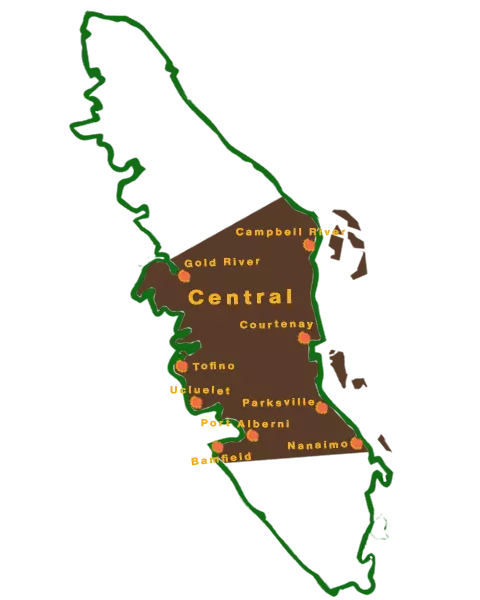
Central Island
Central Vancouver Island is the largest area in size of the three zones on the island. Free camping opportunities begin to increase here as you travel north on Vancouver Island. Some recreation sites operate on a fee-based system.
Strathcona Park is in the central zone of the island. This provincial park is British Columbia’s oldest with many campgrounds both paid and free to choose from. View Central Vancouver Island campgrounds and map
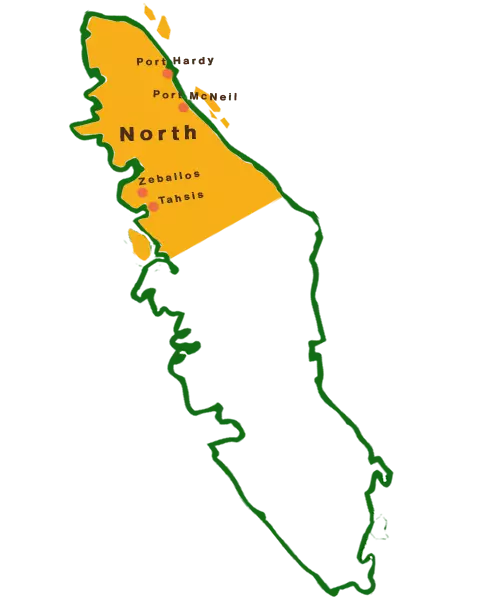
North Island
Northern Vancouver Island is the most remote zone on the island. The north island offers many wilderness campgrounds for free and a fee. It is a little harder to reach by road, but most areas are still accessible.
Cape Scott Provincial Park on the northern tip of the island offers a beautiful experience with one of the most sought after wilderness trails on the island. View Northern Vancouver Island campgrounds and map
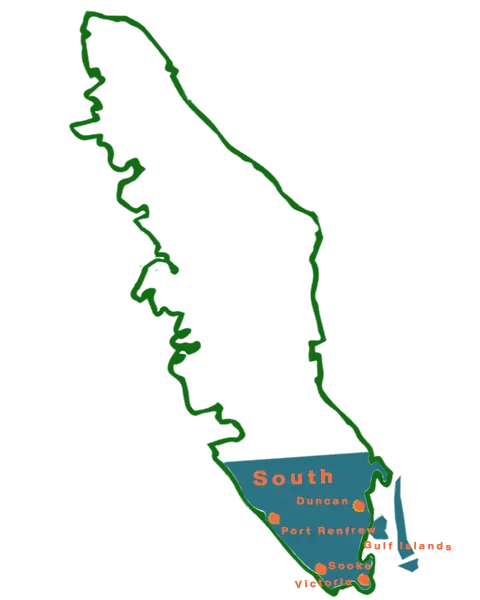
South Island
Southern Vancouver Island is the most populated zone on the island. Not many free campgrounds but lots of paid campgrounds with amenities. Goldstream Park is located in this zone.
The southern west coast boasts the beginning of the West Coast Trail. Considered the best and most popular multi-day wilderness trek on the island. View Southern Vancouver Island campgrounds and map
Geography of Vancouver Island
Vancouver Island is the largest island on the west coast of North America.
It stretches 460 kilometers (290 miles) from tip to tip, extends 100 kilometers (62 miles) at its widest point and covers 32,134 km² (12,407 sq miles).
Vancouver Island is part of the Canadian Cordillera. Much of the island’s interior is shaped by the Vancouver Island Ranges, with rugged mountains, forested valleys, lakes, rivers and long inlets that create many different camping environments.
Vancouver Island’s west coast has some deep and long inlets. They provide scenic and awesome recreational opportunities for boaters and kayakers alike.
Two of them are Alberni Inlet and Muchalat Inlet which have long river watersheds that flow into them containing many lakes available for camping.
These are the Somass River Watershed and Gold River Watershed respectively.
The interior forested mountain ranges offer exceptional camping, hiking and outdoor experiences that create memories which will last a lifetime and keep you yearning to return.
Some of the more popular mountain peaks which happen to be the highest are: Golden Hinde (2200 m), Elkhorn Mountain (2194 m), Victoria Peak (2163 m) which lies between Schoen Lake and Strathcona Provincial Parks, Mount Colonel Foster (2135 m), Mount Albert Edward (2,094), Rambler Peak (2,092), Mount McBride (2,083), and Kings Peak (2,065 m).
Freshwater Lakes and Rivers on Vancouver Island
There are hundreds of lakes with the largest ones being Kennedy Lake 6,475 ha, Cowichan Lake 6,204 ha, Great Central Lake 5,085 ha, Sproat Lake 3,775 ha, Nimpkish Lake 3,653 ha, Buttle Lake 3,095 ha, Upper Campbell Lake 2,978 ha, and Nitinat Lake 2,748 ha.
There are many others that fall into the 1000 to 2700 ha range and numerous lakes under 1000 ha.
Some of the most popular rivers that flow from the mountainous terrain of the island are: Campbell River, Cowichan River, Gold River, Nanaimo River, Nimpkish River, Nitinat River, Salmon and Somass rivers.
The largest watershed on Vancouver Island is the Nimpkish River watershed which extends 100+ km (62+ mi) flowing from Mount Alston northwest into Nimpkish Lake and continuing on to the north until it reaches Broughton Strait.
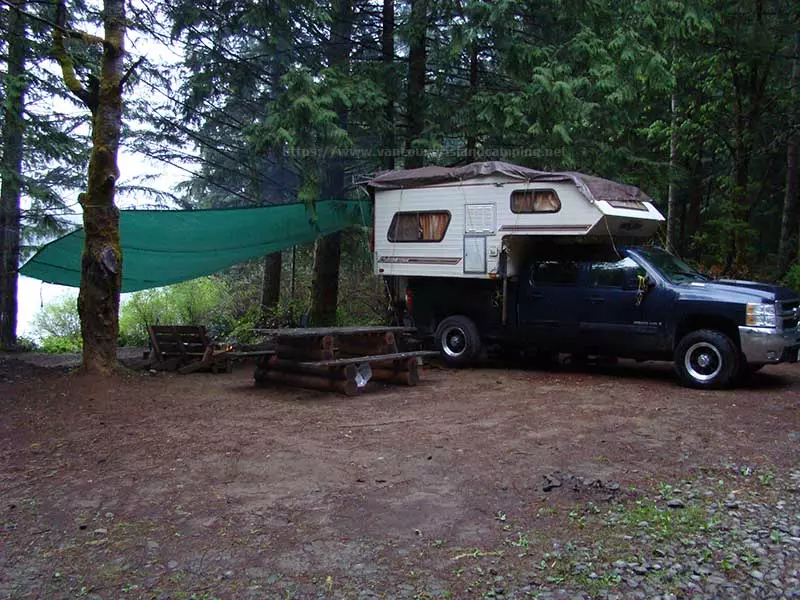
Northwest Of Campbell River, Vancouver Island
Basic Steps To Plan Your Vancouver Island Camping Adventure
1. Vancouver Island Camping Experience.
Before packing up your RV or SUV/4×4, you must decide what type of camping experience you want to have.
Are you more comfortable with a traditional outdoor experience that features restrooms, showers, and some of the other comforts of home?
Or are you the more primitive type that likes to experience the outdoors the way it is meant to be experienced?
Typically, you will find different RV parks and campgrounds that have running water as well as electric hookups in the central and southern region.
Whereas, the more primitive camping experience will likely be had on the campgrounds to the west and north.
For example, Cape Scott Provincial Park and Pacific Rim National Park Reserve.
You can also camp at most of the Provincial Parks on Vancouver Island.
2. Pick The Time Of Year.
After you have decided on the kind of experience you want to have, you are going to need to pick a time of year that you will visit when camping on Vancouver Island.
Do you enjoy being with crowds?
Or do you prefer to have more isolation and private time?
Depending on the time of year, you will have the option for both.
The campgrounds on Vancouver Island are generally more crowded and busy during the months in the summer.
Some of the more popular campgrounds even sell out at this time of the year.
However, the late summer and early spring tend to offer the same amazing experiences without the rush of the large crowds.
Most forestry recreation sites are less populated in the earlier times of the season and in the latter half of fall before the winter weather rolls in.
3. Visit The Campsites Or Their Websites.
You can either visit the campsites themselves or you can take a look on their website(s).
This should give you a good idea on what you can expect from them in terms of amenities.
This will allow you to be able to make an informed decision regarding what to bring, what you do not need to bring and how much time to allow for travel to and from the campground of choice.
You can even read through our own collection of articles or watch some of our walk-through videos of the campground in the article or tip.
4. Reservations.
Not all campgrounds on Vancouver Island use the same reservation system. Some BC Parks campgrounds can or must be reserved, while others have first-come, first-served sites.
Most Recreation Sites are first-come, first-served, although a few now take reservations (ie: group campgrounds). Private campgrounds make their own rules, so check with them before you arrive.
Not every park campground on Vancouver Island allows reservations and those that do sometimes have a limited number of first-come, first-served campsites.
Some of the rules for campsites without reservations may include a limited length of stay to allow for everyone to have a fair chance at experiencing the camping area they have decided upon.
5. Pack Correctly and Enjoy!
The last step involves having to pack all of your necessities that you need in order to keep yourself dry and safe.
For the basics you should bring a waterproof jacket, long pants, and thermal gear in order to keep your body warm during the cold and long nights.
You should however create a list of items that you would like to have and actually need to make your experience a more pleasurable and safe one! If you prefer you can use our basic check list as a baseline to keep adding to.
You will be able to fine tune this list every time you plan a new adventure based on the things that you wished you had packed during the last one.
Create a basic safety plan before you go! Consider tick prevention, a first aid kit, wildlife awareness, water safety, warm-up exercises before hiking and leave your travel plans with someone in case something goes wrong.
By following the steps above, you should be ready to have a great time camping on Vancouver Island. Get ready to have one of the most incredible experiences of your life!
Vancouver Island Camping respectively acknowledges the traditional territories of the Coast Salish, Kwakwa̱ka̱ʼwakw and Nuu-chah-nulth peoples.

“ It is wonderful to feel the grandness of Canada in the raw.“
-Emily Carr-